Un nuovo paradigma — 01 | La contaminazione come problema di progettazione
Da decenni i bidet elettronici sono progettati secondo lo stesso principio: un ugello collocato sotto l’utilizzatore e un getto d’acqua diretto verso l’alto, verso la regione perineale.
Questa soluzione presenta una criticità strutturale: l’ugello opera direttamente sotto l’area che deve lavare. Durante l’utilizzo, il contatto con residui fecali, gocce e splash-back non può essere escluso a priori.
La domanda non è quindi soltanto: quanto è pulita l’acqua che entra nel sistema?
La domanda più importante è: che cosa accade al sistema di lavaggio dopo essere entrato nell’ambiente della contaminazione?
Uno studio giapponese del 2017, condotto su 292 WC elettronici in ambiente ospedaliero, rilevò contaminazione nell’86,9% degli ugelli esaminati. Altre ricerche hanno successivamente studiato la persistenza batterica, l’acqua residua e la formazione di biofilm nei sistemi bidet.
Questo non significa che ogni bidet elettronico provochi infezioni. Significa però che il sistema di lavaggio può essere esposto alla contaminazione microbiologica e diventare parte del problema igienico.
PREVENIRE PRIMA DI SANIFICARE
I sistemi convenzionali possono prevedere risciacqui automatici dell’ugello e procedure di pulizia. Sono misure utili, ma risciacquare un componente dopo l’esposizione non equivale a progettare il sistema per ridurre quella esposizione.
Perché affidarsi alla pulizia dopo la contaminazione, quando è possibile ridurne la possibilità attraverso la progettazione del percorso dell’acqua?
Precisione Micrometrica ed Ergonomia Avanzata

VALIDAZIONE INGEGNERISTICA
Corsa Lineare 25mm & Controllo Micro
La foto ingrandita mostra l'ugello lineare di scorrimento nella sua asola, affiancato da un elemento di misura certificato (righello da disegno tecnico in millimetri). La corsa totale di circa 25mm, evidente sulla scala, garantisce un posizionamento chirurgico e affidabile del getto per l'igiene posteriore, confermando la solidità e la scalabilità del meccanismo.

ERGONOMIA AVANZATA
Inclinazione Variabile per Igiene Femminile Mirata
Accanto, la configurazione con l'ugello inclinato obliquamente. Questa geometria, totalmente assente nei competitor, è fondamentale per l'igiene femminile avanzata. Permette una detersione anteriore precisa e mirata, massimizzando l'efficacia del getto tangenziale e adattandosi perfettamente alla postura invertita dell'utente.
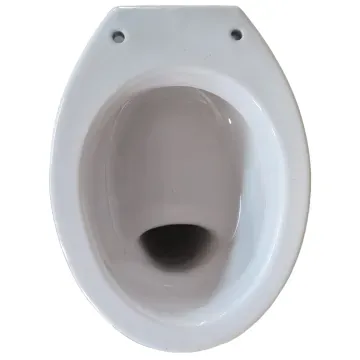
02 | VERXALUS — Riprogettare il percorso dell'acqua
(Foto di vecchio wc austriaco, il piatto per il MEMS avrà dimensioni ridotte)
Non pulire il problema. Riprogettare il percorso.
Verxalus affronta il problema alla radice: invece di dirigere il getto verticalmente verso l’alto, utilizza un microgetto orizzontale e tangenziale controllato.
L’ugello può essere regolato verticalmente di 25 mm, compensando le differenze anatomiche individuali e mantenendo la traiettoria prevista.
Quando il getto raggiunge la regione perineale, la curvatura naturale della cute ne devia il flusso. La componente cinetica orizzontale viene dissipata e la gravità dirige acqua e residui verso il basso, direttamente nella tazza.
Il percorso diventa:
acqua → contatto controllato → deviazione verso il basso → tazza
anziché:
acqua → impatto dal basso → splash-back → sistema di lavaggio
L’obiettivo è ridurre la possibilità di ritorno del materiale contaminato verso l’erogatore, intervenendo sulla geometria del lavaggio anziché affidarsi esclusivamente alla sanificazione successiva.
L’architettura interna mantiene inoltre il percorso dell’acqua semplice e accessibile, predisponendolo all’introduzione controllata di una soluzione detergente validata quando necessaria.
E non è tutto. La stessa architettura può integrare una piattaforma MEMS per l’analisi dei residui biologici, trasformando il WC da semplice apparecchio sanitario in un punto di osservazione e monitoraggio.
Nel 2006 un text in vivo seguito da tampone vaginale mostrò assenza di batteri fecali. Quello costituì la base sperimentale per lo sviluppo dell'architettura tangenziale.
Superiorità Tecnologica: I Vantaggi del Sistema
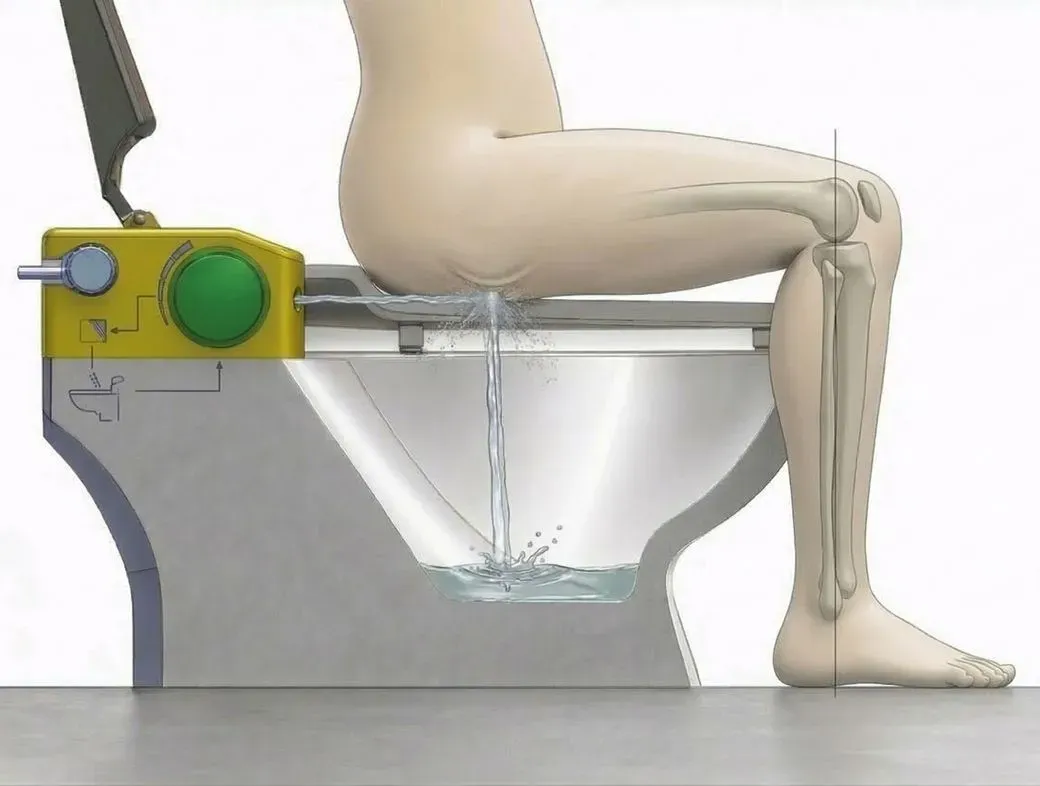
Biomeccanica del Getto Orizzontale -
La pressione calibrata sfrutta la deformazione elastica della pelle, deviando i residui in verticale ed eliminando il rischio di splash-back sull'ugello.

Architettura Interna e Meccanica:Ingegnerizzazione ottimizzata degli spazi: attuatore a zero usura, controllo micrometrico del flusso e componentistica idraulica isolata.
1 - Rubinetto; 2 - Pomello; 3 - Meccanismo; 4 - Riscaldatore; 5 - Conformato; 6 - Placca fissaggio wc.

Predisposizione Spettrometria MEMS.
Modulo progettato per alloggiare sensori ottici non invasivi per l'analisi delle feci, aprendo le porte al monitoraggio diagnostico preventivo.

Ergonomia Avanzata BioSeat.
Conformazione anatomica progettata per allineare perfettamente il coccige e favorire il distendimento muscolare durante l'irrorazione perineale.
1 / 4
RICERCA CLINICA: Validazione Scientifica Indipendente
Il rischio batterico dei sistemi tradizionali certificato su PubMed.
Paragraph (Testo condensato con link finale): Uno studio medico giapponese pubblicato su PubMed ha dimostrato empiricamente che i bidet elettronici a getto ortogonale presentano una grave e frequente contaminazione batterica dell'ugello (splash-back). Questa ricerca indipendente certifica l'urgenza di un nuovo standard sanitario preventivo, confermando l'assoluta necessità clinica dell'architettura di lavaggio orizzontale brevettata da Verxalus. [Clicca qui per lo studio su PubMed]
Il Prototipo in Azione
La maturità ingegneristica di Verxalus è il risultato di un rigoroso processo di sviluppo. Come dimostra il video del nostro primo prototipo funzionante, il progetto prevedeva inizialmente un sistema di puntamento robotico di altissima gamma. Questa versione integrava micro-telecamere, illuminazione LED e computer vision guidata dall'intelligenza artificiale per pilotare i micro-attuatori con precisione chirurgica.
Adattamento Strategico al Mercato
Se da un lato questa fase ha validato con successo la nostra cinematica a due assi, dall'altro ha ispirato un'evoluzione strategica. Abbiamo compreso che il vero valore dirompente risiede nella pulizia intrinseca del getto orizzontale. Eliminando i complessi software richiesti dai competitor, abbiamo adattato il nostro robusto meccanismo a un sistema di controllo analogico, manuale e altamente affidabile.
Un Ecosistema Multilivello
Questa versatilità è il nostro più grande asset commerciale. Ci permette di affrontare il mercato di massa (B2C) con versioni meccaniche ultra-affidabili, offrendo al contempo ai mercati sanitari e ospedalieri (B2B) hub diagnostici automatizzati e ricchi di sensori. Verxalus rappresenta un ecosistema tecnologico protetto, progettato per rivoluzionare sia il settore dei sanitari tradizionali che la diagnostica preventiva.